Bridging Physical Hardware & Real-Time Software: Designing IoT Billing Engines
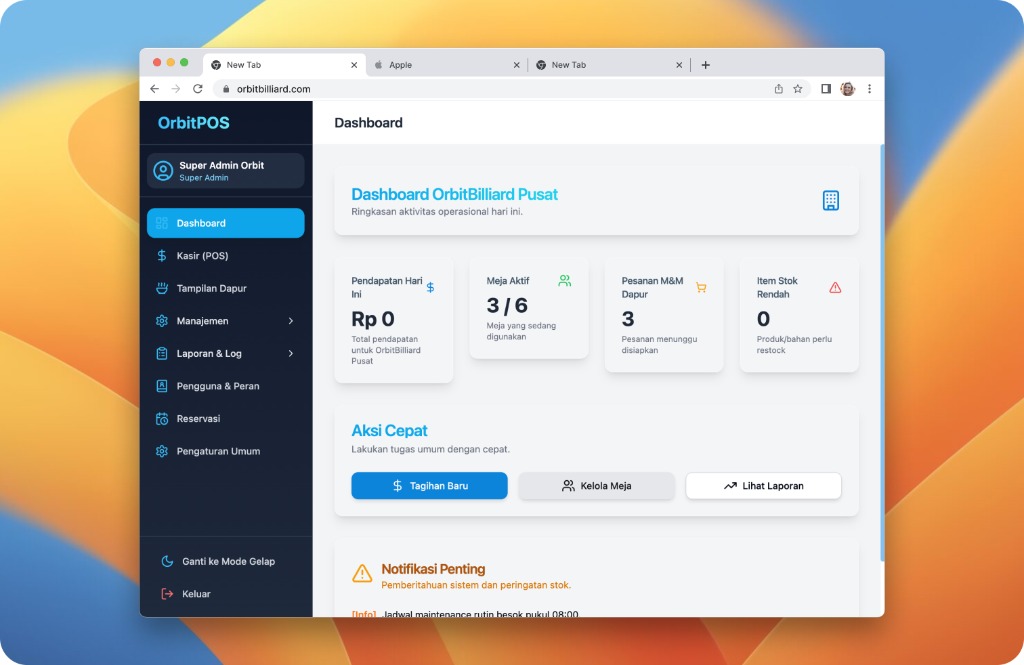
Bridging Physical Hardware & Real-Time Software: Designing IoT Billing Engines
Software development in commercial web applications usually lives inside an orderly digital sandbox: databases guarantee ACID transactions, HTTP requests return predictable status codes, and user actions can be audited cleanly. But when building operational systems for physical spaces — such as billiard venues in OrbitPOS or gaming arenas in PlayStation Rental POS — software must interface directly with physical electricity, hardware relays, and human operational friction.
The Fragility of Naive Billing Timers
Many legacy venue management applications rely on client-side browser timers or periodic database polling. This approach fails rapidly in real-world commercial environments:
- If a cashier refreshes the browser tab or the local computer crashes, local countdown timers desynchronize.
- Cashiers can exploit manual overrides or delay stopping sessions to manipulate revenue reports.
- If local internet drops, polling loops freeze, leaving physical venue lights or TV screens active indefinitely without billing.
1. Server-Authoritative Clock Architecture
To eliminate timing ambiguities, the system must enforce a single authoritative clock on the backend. Sessions never store "remaining minutes" as a mutable field. Instead, the database records immutable timestamps:
interface ActiveSession {
  sessionId: string;
  tableOrUnitId: string;
  sessionType: "OPEN_HOURLY" | "FIXED_PACKAGE";
  startedAt: string; // ISO 8601 UTC
  scheduledEndAt?: string; // ISO 8601 UTC (if fixed)
  ratePerMinute: number;
  status: "ACTIVE" | "PAUSED" | "COMPLETED";
}
At any millisecond, billable duration is derived deterministically: currentTime - startedAt - pausedDuration. Client devices (tablets, cash registers, mobile monitors) receive real-time state updates over persistent WebSockets, rendering UI timers purely as visual projections of the server's authoritative state.
2. Hardware Relay Integration: Bridging Bits and Amperes
Automating physical hardware requires bridging software events with physical electrical relays (e.g. ESP32 microcontrollers or industrial IoT smart plugs controlling table lamp ballasts and television power).
Communication between the central POS server and venue hardware runs through lightweight, fault-tolerant protocols:
- Local Gateway & MQTT Broker: A localized gateway device runs inside the venue's local area network (LAN). When a session starts, the server publishes a signed relay trigger command. Even if WAN internet drops, local hardware control remains operational.
- Hardware-Level Failsafes: Relays are programmed with autonomous hardware watchdogs. If the microcontroller loses communication with the server for longer than a predefined threshold, it defaults to a secure fail-safe state, preventing unauthorized free play.
3. State Reconciliation & Audit Resilience
Every hardware action (lamp switched on, power cut, session extended) generates a cryptographically hashed event log. By reconciling physical power logs against financial ledger entries, business owners can spot discrepancies immediately, eliminating cash register leakage and administrative disputes.
Conclusion
IoT-integrated POS engineering is fundamentally about bridging trust gaps. When software directly commands the physical environment, reliability cannot be an afterthought — it must be architected from the physical relay up to the WebSocket transport layer.